



Archives

Benchmarking – A Means to Reduce Existing Building Energy Consumption

public and commercial building managers and owners grow more sophisticated with their energy saving techniques, each is beginning to investigate different means of measuring their energy consumption. The term “benchmarking” describes the process of tracking the energy consumed, over time, of an existing building and comparing the results to similar buildings or an applicable standard.

While engaging with multiple states and municipalities in the Midwest on this topic, Midwest Energy Efficiency Alliance (MEEA) has developed a policy brief on this topic to assist facility managers, public building administrators, and private commercial owners in understanding the fundamental ideas within these types of policies. Entitled, the “MEEA Benchmarking Fact Sheet for Comm and Public Buildings,” this short document outlines the process and overall benefits of benchmarking existing building energy consumption.

Some benefits of tracking energy consumption:

  • Benchmarking allows Building Owners and Managers to assess the performance of an existing building’s total energy use and track the actual energy consumed during its operation.
  • Understanding energy consumption costs enhances the predictability of yearly budgeting.
  • Benchmarking improves market competitiveness among commercial buildings by allowing potential tenants and purchasers another means of compare comparison.
  • Energy tracking supports the local economy (particularly jobs related to energy efficiency)
  • A high potential of energy savings are a result – as are related reductions in greenhouse gas emissions, conservation of resources, and enhanced fuel reliability.

While there are a wide variety of tools currently available, EPA’s ENERGY STAR Portfolio Manager (http://www.energystar.gov/index.cfm?c=evaluate_performance.bus_portfoliomanager#manage) is an industry standard. This web-based program summarizes the total, annual energy use for all fuels (natural gas, electricity, etc.) on a square foot basis (kBtu/sqft/year), normalizes the energy use to climate data, and links the information to the occupancy type and rate/percentage of the building. The program converts this information into a single, 1 to 100 score, whereas 1 point equals one percent of the population of buildings and the higher a score the less energy used per year. As such, a score of 70 for a building means it uses a similar amount of energy that 30% of buildings use.

According to an October 2012 EPA study www.energystar.gov/ia/business/downloads/datatrends/DataTrends_Savings_20121002.pdf), buildings using the EPA ENERGY STAR Portfolio Manager tool to track their energy consumption had an average annual savings is 2.4%, with a cumulative savings of 7.0% between 2008 and 2011. This study also noted that buildings which start out with lower ENERGY STAR scores are able to achieve the greatest savings. Of the building data captured in the EPA study, those which started with below average energy efficiency in 2008 (i.e., score under 50 out of 100) saved twice as much energy as those starting above average.

By simply keeping track of energy use through utility billing information, better energy management results in actual dollar savings. This follows the old adage, “you can’t manage what you don’t measure.”

Join ENERGY STAR and RSG to learn about PC Power Management and $12 rebates for ComEd customers

Join the US Environmental Protection Agency’s ENERGY STAR program to learn more about how installing power management software on your computers can reduce expenses and contribute to your company’s bottom line.  You can be the greenest person in the office and save your company money – join us for 30 minutes to learn how!


The focus of the webinar is to introduce the computer power management savings opportunity, explain technology solutions in layman’s terms, and provide practical tips for getting key decision makers on board. Armed with this knowledge, you will next learn from Resource Solutions Group about a program where ComEd ratepayers may receive cash rebates for the installation of PC Power Management Software.

Who:
Business decision-makers who are non-IT experts. We will make it simple to understand (with lots of pictures!) This program is only available to commercial customers in the Commonwealth Edison (ComEd) electric delivery service territory in Illinois.

When:

MEEA Whitepaper Published: A Net or Gross Energy Savings Approach

In July 2012, MEEA held its Annual Meeting of the Membership in Chicago, Illinois.  A key focus was a panel of experts who remarked on their experiences determining the energy benefits of end-use efficiency programs.  The panel consisted of energy efficiency evaluators, regional policymakers, and utilities, who provided three distinct perspectives on the benefits and challenges inherent in using a net savings or a gross savingsapproach.

This paper summarizes  panelist remarks, and provides the key policy implications for energy efficiency programming and attribution in the Midwest.  We also provide foundational information on net and gross savings calculations, and the controversies inherent in using either approach.

MEEA and experts in the field will address this – and other EM&V issues –in future conferences, webinars, and policy papers.

Download the report here. [PDF]

Results of MEEA’s 2013 Solid-State Lighting Plans and Perceptions Survey

MEEA recently completed administration of its annual Solid-State Lighting Plans and Perceptions Survey, in support of the U.S. Department of Energy’s (DOE) Technical Information Network for Solid-State Lighting Program (TINSSL). The 2013 Midwest Solid-State Lighting Plans and Perceptions Survey Summary Report of Findings, derived from the 2013  Survey is available on MEEA’s main website and offers insights into solid-state lighting (SSL) perceptions throughout the Midwest.

In order to realize the Midwestern potential to contribute to the energy savings offered by the adoption of SSL, it is critical to understand the current environment around SSL adoption throughout the Midwest. MEEA’s primary goal in survey administration was to query entities within the Midwest to provide a snapshot of regional attitudes toward SSL, how those attitudes are informing energy efficiency program activity, current successes and limitations of SSL programs, and what can be done by the lighting industry and energy efficiency groups to advance SSL adoption swiftly, yet sensibly.

The analysis of the survey was split between program entities and commercial entities. Almost two-thirds of program respondents felt they receive too little SSL information, an increase from 2011, which may show   greater interest in SSL among program respondents. Most notably,   respondents from both the program and commercial side did not feel they received too much SSL information.

The U.S. Department of Energy was cited as the most used resource by program entities and the second most used resource by commercial respondents.  Overall, DOE resources were reportedly utilized fairly evenly by both groupings although DOE program preference varied.  The reported use of federal information sources has also grown on the program side. Nearly all commercial respondents are considering coupling SSL with additional efficiency technologies.  As noted in the 2011 report, adoption of these additional measures may help bring the pay-back period of many SSL systems into the realm of feasibility.  It would be interesting to further investigate why the commercial respondents displayed more interest in coupling strategies than program entities (60% of program entities did not respond to this particular question).

Respondents continue to show a high interest in identifying product quality, proven program strategies and best practices, and learning about retrofitting with SSL. By continuing this survey on an annual basis, MEEA is tracking how SSL plans and perceptions are shifting over time. The previous surveys can be found here.   For more information and resources on SSL, please visit the Midwest LEDers page on mwalliance.org.

Recent studies support residential energy efficiency investments

A series of recent studies provides further evidence that home energy improvements are a smart investment by quantifying the value of residential energy efficiency. Taken together, these studies show that home buyers value residential energy efficiency improvements and are willing to pay for these improvements. Added to earlier findings that show homeowners make energy upgrade decisions based on increasing comfort, health, and safety, this latest crop of studies show that those same improvements might also make good financial sense. This is good news for recent participants in programs such as Illinois Home Performance with ENERGY STAR.

Last year, a California study looked at the sale of homes over several years in the late 2000s and determined that home buyers were willing to pay a nine percent premium on the purchase of a new home if it was accompanied by a third party green certification. As previously blogged by MEEA staffer Matthew Giudice, another 2012 study by the National Association of Home Builders (NAHB) found that new home buyers value energy efficiency over comparable homes, finding that 90% of respondents would be willing to pay two to three percent more for a home that included energy efficiency features and permanently lower utility bills.

What’s more, homeowners aren’t just waiting to purchase energy efficient homes; they are also willing to invest in doing the upgrades themselves. The Association of Energy Services Professionals (AESP), and International Communications Research (ICR) released a joint study this week based on a telephone survey of 1,000 U.S. homeowners. They found that 55 percent of US households have taken steps to increase the energy efficiency of their home, most commonly through CFL installations, high efficient appliances, high-efficient windows, increasing attic insulation, and the use of smart strips. The same study found that nearly 40 percent of respondents had participated in utility efficiency programs.

Lastly, a study out of the University of North Carolina at Chapel Hill for the Community Capital and the Institute for Market Transformation (IMT), released Monday, titled “Home Energy Efficiency and Mortgage Risks,” looked at 71,000 single-family, owner-occupied homes with mortgages originated during 2002-2012. The study states that homeowners that purchase ENERGY STAR new homes have a 32% lower risk of defaulting on their loans, controlling for other factors. Additionally, even among efficient homes, there was a statistically significant indirect relationship between efficiency and mortgage default risk.

These studies show that homeowners today are looking to invest in both energy efficient new and existing homes and that this smart decision makes them less risky borrowers. For more information on ways to improve your home visit www.illinoishomeperformance.org/

Energy Efficiency a Priority For New Home Construction

The National Association of Home Builders (NAHB) recently released a study called “What Home Buyers Really Want.”  The study is based on a 2012 survey of home buyers, conducted by NAHB’s Economics and Housing Policy Group.  According to the study, energy efficiency has become a top priority for prospective home buyers.  Survey respondents reported that they look for features such as Energy-Star rated appliances and windows and that they are willing to pay extra for these features.

Consumer attitudes on energy efficiency seem to be evolving, as more home buyers are willing to look at the up-front costs as investments that will eventually pay for themselves in the form of lower future utility costs.  In a similar survey from 2008 conducted by NAHB, 67% of respondents said they would be willing to pay more than $5,000 for energy efficiency upgrades.  In the 2012 survey, 90% of respondents indicated they would be willing to pay two to three percent more for a home that included energy efficient features and permanently lower utility bills.

The results of this study, which can be purchased as an e-book at NAHB’s bookstore, are being distributed among the home building community and will hopefully serve to continue the transformation of the residential construction market that is driven by consumer demand.

ACEEE Report: Overcoming Market Forces to Advance Energy Efficiency

The recently released ACEEE report, Overcoming Market Barriers and Using Market Forces to Advance Energy Efficiency, highlights 16 cost-effective policies which have the potential for very large impacts on the consumption of energy in the U.S.

Benchmarking, building energy use public disclosure, and building energy rating policies are one of the major policies noted. The report suggests these have an approximate potential of 1.6 quads of energy and $60 billion that could be saved between 2014 and 2030 with the development of a comprehensive, national building labeling and benchmarking program or collection of policies. Addressed at either a local, regional, or national scale, this type of program leverages market mechanisms without requiring substantial spending or government mandates.

Building benchmarking and labeling policies also have other benefits. Annual benchmarking requirements create a tangible record of energy performance over time, and allow building owners to verify the impact of building operational changes or efficiency improvements once implemented. These types of programs also provide policymakers and building designers with a mechanism to track energy use trends. Benchmarking and energy ratings can be applied to any building – either commercial buildings, residential, and/or mixed-use using a variety of currently available tools.

MEEA has assisted state and local governments to review, pilot, and implement such policies, including the City of Minneapolis (http://www.minneapolismn.gov/environment/WCMS1P-105433) and the State of Illinois. Our goal is to assist the Midwest Region in becoming a leader in these types of policies, as well as assisting building owners to implement effective strategies to reduce energy use in buildings.

The report can be found at: http://aceee.org/research-report/e136.

Building Energy Benchmarking and Disclosure is Adopted by the City of Minneapolis

On Friday, the City of Minneapolis announced the adoption of a new ordinance, which requires public disclosure of commercial building energy consumption data to consumers and potential purchasers. The ordinance, unanimously passed by the Minneapolis City Council, is the first Commercial Building Rating and Disclosure Ordinance to be enacted the Midwest region.

While the ordinance creates a framework for energy use disclosure, it does so without relying on performance or regulatory mandates to increase energy performance awareness. As such, it will depend on market forces to motivate building owners to invest in energy efficiency improvements. Currently, there are many opportunities already available for commercial building owners to evaluate their present energy use and benefit from existing utility incentive programs from Xcel Energy and CenterPoint Energy. This ordinance builds on these efforts with its ultimate goal to increase the energy efficiency of existing buildings in the commercial real estate marketplace by providing consistent data to potential building purchasers and tenants, as well as current building operators.

Using EPA’s ENERGY STAR Portfolio Manager tool to track and disclose energy use information, the City will publically disclose an annual summary of statistics for each applicable building. This information will include the energy use intensity (or EUI, combining electricity, natural gas, and other fuel types together and expressed in the kBtu per square foot per year).In addition, the building’s energy performance score, when available, Read the rest of this entry »

MEEA assists with Home Energy Certification programs

Currently, The Midwest Energy Efficiency Alliance (MEEA) is assisting the Missouri Department of Natural Resources’ Division of Energy (MDNR-DE) in facilitating a stakeholder process to develop a state-specific voluntary home energy certification program. Previously, MEEA completed similar tasks for the Illinois Department of Commerce and Economic Opportunity (DCEO) as a Statewide Coordinator for the Illinois Home Performance with ENERGY STAR® program.

These statewide certification programs will help homeowners capture the value of their home energy efficiency investments by providing potential buyers with the information necessary to make informed purchasing decisions. From one study, similar green labeling resulted in a 9% premium on home purchase price.[1] A great way for State Energy Offices (SEOs) to promote the real estate industry’s buy-in of energy efficiency, while supporting existing residential programs, is to recognize homeowners that make quality energy efficiency upgrades to their home.

Since 2009, MEEA has partnered with DCEO to engage relevant stakeholders and launch a statewide Illinois Home Performance with ENERGY STAR (HPwES) program that includes home energy certification. Today, homeowners in Northern Illinois can attach their Illinois Home Performance Silver and Gold Certificates of Completion to the green fields of the local Multiple Listing Service (MLS).

In Missouri, meanwhile, MEEA is assisting MDNR-DE in engaging residential programs, investor owned utilities, electric cooperatives, trainers, colleges, home performance contractors, energy auditors, nonprofit organizations, and more, in a stakeholder process to design a certification program that supports existing energy efficiency efforts and meets Missouri’s specific needs. In both instances, Read the rest of this entry »

Midwest BOC Program Expands to New Areas, Receives Accolades from NEEC

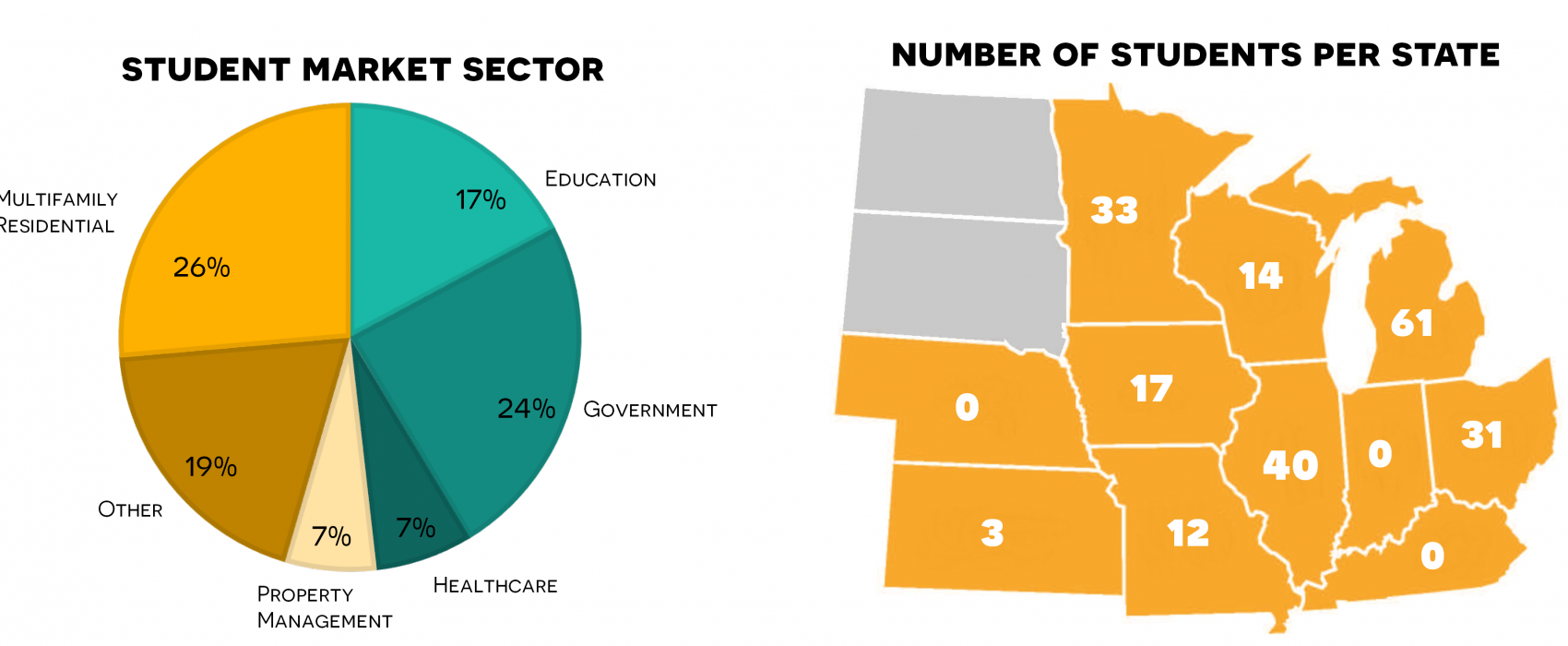
MEEA is excited to announce new Building Operator Certification (BOC®) programs in Nebraska and Ohio.

Nebraska-based building operators will have their first opportunity this February to earn the award-winning BOC credential and learn valuable techniques for saving energy in their facilities.  A collaborative effort between MEEA, the Nebraska Public Power District (NPPD), and the Central Community College (CCC), the Nebraska BOC program begins on February 12 at the CCC Columbus campus. Facilities that are eligible to participate in NPPD’s EnergyWiseSM incentive program (a customer of NPPD or one of its wholesale utility partners) may apply for full tuition reimbursement from NPPD upon attaining certification and implementing an approved energy efficiency project.

In Ohio, MEEA is partnering with AEP Ohio to help its commercial customers realize energy and cost savings through BOC.  The AEP Ohio BOC program kicks off in Findlay, Ohio starting on March 7, and additional training will be offered later in the year.  AEP Ohio, a MEEA member, is encouraging participation in BOC by offering its Ohio customers two awards that together cover the cost of tuition for their employees – a Certification Award for successful BOC certification (provided that the customer is not a state-funded facility, except a facility of a state institution of higher education) and a Project Award for approved in-facility project completion.  MEEA offers additional BOC programs throughout Ohio in partnership with the Ohio Public Facilities Maintenance Association. Read the rest of this entry »

 Page 1 of 22  1  2  3  4  5 » ...  Last »